Second-Morning Bread: The Loaf That Doesn't Peak on Day One
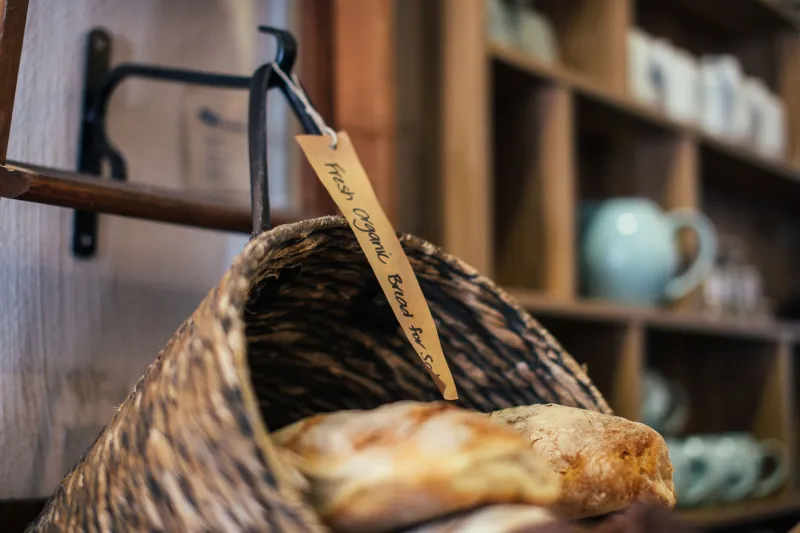
There's a smell that arrives at about ten past seven on a wet November morning. The baker's van pulls up on the double yellows outside, the back doors swing open, and two crates come out. One is warm enough to fog the window. The other is yesterday's, wrapped in paper, and it goes on the counter by the till with a handwritten card propped against it.
That second crate is what I want to talk about, because it's the least glamorous thing in the shop and possibly the most useful.
Two crates, one baker, one arrangement
We take our loaves from a bakery two streets down — a small operation that starts at eleven at night and finishes before we unlock. The standing order is modest: enough for the morning rush, the lunch trade and the toastie press, with a bit of slack on Saturdays.
The part that matters is what happens to whatever doesn't sell. Rather than letting the baker absorb the loss, we buy the unsold loaves back at a fair wholesale rate. Not free, and not a favour — a price agreed at the start of the year and revisited whenever flour does what flour does. The bakery gets a predictable order and doesn't have to watch its own work go into a bin bag at the back door. We get firm, flavoursome bread for the parts of the counter that don't need a soft crumb: the soup pot, the crumb tin, the crostini, the two o'clock toastie.
It also means we can sell a loaf on Wednesday that was baked on Tuesday, and say so out loud.
Fresh is a sensation. Good is a flavour.
A loaf four hours old is soft, yielding, easy to squeeze. A fair amount of what we call freshness is really temperature and give. Overnight, the starch firms up — retrogradation, if you like the technical word — and a slice from yesterday feels denser and chewier, less pillowy.
What it doesn't do is lose flavour. In a long-fermented sourdough the opposite tends to happen: a night on the shelf rounds out the tang and pushes it towards something savoury, almost cheesy. The crust gives up its glassy crackle and takes on a chew that's arguably better with salted butter and a wedge of cheddar.
Reviving it isn't a secret, just a habit. Cup your hand under the tap, flick water over the crust, six or seven minutes at 200C, and you'd be hard pressed to tell it from this morning's bake. Sliced, three minutes will do. A dry loaf is a dry loaf, but a firm one is not a stale one.
Beyond toast: where a firm crust earns its keep
Toast is the obvious answer and the boring one. A day on the shelf actually makes bread better at several jobs:
- Ribollita and other bread soups. Old bread thickens without flour or cream, dissolving into the broth until you'd swear it was never there.
- Crumbs. Coarse for the top of a cauliflower cheese, fine for bread sauce with the Christmas bird, or for a treacle tart where fresh white crumbs would go gluey.
- Crostini and the cheese board. Firm slices hold up under oil, honey and a hard cheese in a way that a soft new loaf simply can't.
- Bread and butter pudding. A two-day loaf soaks up custard properly instead of collapsing into it. Add marmalade and a handful of sultanas.
- A winter panzanella. Skip the tomatoes; roast squash and cavolo nero, torn bread toasted in the oven, hazelnuts, a sharp dressing.
- Fried bread. The Sunday morning argument-settler, done in beef dripping or good olive oil.
- The freezer. Slice before freezing and go straight to the toaster. Nothing is wasted, and nothing needs to be eaten in a panic.
Selling it honestly
Here's where delis trip themselves up. The instinct is to put yesterday's loaves in a basket marked down, and the markdown label tells the customer this bread is a failure with a discount attached.
Calling it what it is works better. Ours says second-morning bread, priced a little lower, with a line about what it's for: “Baked yesterday. Best for soup, crumbs, the toaster, or a pudding on Sunday.” A proper basket, a clean cloth, a card in actual handwriting. We'll slice it if you ask. And a small bundle — today's loaf plus a second-morning one — sells better than a yellow sticker, because it assumes the customer has a plan for the week rather than a problem to solve by teatime.
Nobody minds buying yesterday's bread. They mind being told it's a compromise.
Why a small shop bothers
Buying back the baker's leftovers isn't charity and it isn't clever accounting. It's a margin conversation, a waste conversation and a relationship, roughly in that order. It keeps the crumb tin full and the Tuesday soup thicker than it would otherwise be. It keeps fewer loaves out of the bin at the end of a wet week, which for a shop our size is the difference between a shrug and a bad month.
And it lets us make a small, unfashionable argument: a loaf's best day isn't always the day it was baked. Sometimes it's the day after, next to a bowl of something hot.
The loaf you'll actually eat
By four o'clock the second basket is usually down to two or three, and whatever's left gets cubed and dried for the crumb jar. There's no ceremony to it. Bread is a living, awkward, short-lived thing, and a good one shouldn't hit a cliff edge at midnight.
So next time you're in: ask what was baked yesterday. Take it home, wet the crust, give it six minutes. If it's a sourdough, it may well beat the one you'd have bought fresh — and the bakery two streets down will have had a slightly better week because of it.