The Calm Before the Carving: Christmas Eve at the Counter
Christmas Eve has a habit of turning into a second Christmas dinner. Suddenly there are three pans on the hob, a bird to brine, a ham to glaze and a fridge so full that the door will not shut without a firm shoulder. We would like to propose something quieter. Something built from the counter, assembled in minutes, eaten with a glass of something cold and a clear head for the morning.
The night before is not a dress rehearsal
This is not about being virtuous or austere. Christmas Eve supper should still feel generous. It just should not compete with the main event. Think of it as the warm-up act: a plate of good things, one small hot element, bread that deserves butter, and no anxiety about timing. You are not trying to impress anyone. You are trying to sit down.
At The Deli on the Hill, we see the same scramble every December. People come in for a Christmas order and leave with a bag of impulse buys because they have not thought about the twenty-fourth. So here is a plan you can put on the fridge now. It is deliberately short.
What goes on the table
The rule is simple: buy things that are already good, then do almost nothing to them. A Christmas Eve counter supper should look like a happy accident rather than a project.
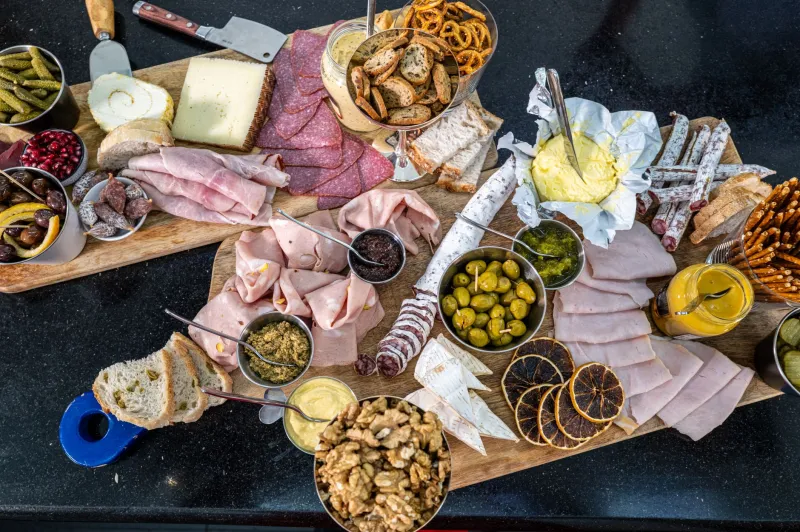
Start with two cured things. A sliced coppa or a mild smoked ham, plus something softer and spoonable: rillettes, a coarse pâté or a little pot of potted beef. Add a jar of something sharp. Cornichons are the obvious choice, but pickled walnuts or a spoonful of piccalilli will do more for the plate than you think. Bread should be sturdy enough to carry a load: a dark rye, a sourdough with a proper crust, or both if the household is divided.
Then choose one cheese. Not five. One that can hold its own: a clothbound cheddar, a wedge of blue, or a soft sheep's cheese if you want something milder. Add butter, mustard, a handful of chicory or watercress if you have it, and that is the cold half done.
The warm thing is where people overcomplicate matters. It does not need to be a course. A small steak pie from the counter, a cheese and onion pasty, a pot of soup, or even a few croquettes slid into the oven while the plates go round. One warm thing, shared. That is enough.
A shopping list you can actually use
- 200g sliced cured ham or coppa
- A small terrine, rillettes or potted beef
- One jar of cornichons, pickled walnuts or piccalilli
- A loaf of sourdough or rye, sliced
- One wedge of clothbound cheddar, blue or soft sheep's cheese
- Butter and a good mustard
- A bag of chicory or watercress
- One small warm thing: pie, pasty, soup or croquettes
That list feeds four comfortably and leaves room for a mince pie later. It also scales without drama. If two more turn up, add another cured meat and a second loaf. Nobody will feel short-changed.
The producers behind the plate
What makes this supper feel like a treat rather than a fallback is where it comes from. The ham we slice at the counter is cured by a small smokehouse a few valleys over, using pork from farms we know by name. The rillettes are made in batches small enough that the date on the jar is written in biro. The cheese comes from a dairy that drops off on Thursdays, and the bread is baked by people who start before the hill has woken up.
That is the quiet argument for buying this meal from a deli. You are not just saving yourself the cooking. You are putting a handful of local stories on the table. The pickled walnuts might come from a grower who has been doing the same thing for decades. The mustard might be made two towns away. It is still a simple supper, but it has roots.
How to put it together without fuss
On the day, do the cold work early. Take the cheese out of the fridge an hour before you want to eat. Slice the bread. Tip the pickles into a small bowl rather than leaving them in the jar, because small bowls make people feel looked after. Lay the cured meat on a plate in loose folds, not flat slabs. Put the rillettes in a pot with a spoon. None of this takes more than ten minutes.
The warm thing goes in when you are ready, not before. If it is a pie, give it twenty minutes. If it is soup, warm it gently and put it in mugs. If it is croquettes, hot oven, turn once, no ceremony. The point is that you are not standing at the stove while everyone else is sitting down.
Keep it on the hill
There is a particular pleasure in eating this way in the last week of the year. The hill is dark by four, the windows are lit, and the counter is full of things that keep well. Christmas Eve supper should feel like that: a plate of good provisions, a warm corner, and the knowledge that tomorrow will be big enough on its own.
So this year, let the bird wait. Let the ham wait. Let the fridge door close. On the twenty-fourth, buy a little less than you think you need, put it on a board, and sit down while it is still early. That is not a compromise. It is the whole point.