The Sprout Gets Its Revenge: A Christmas Case for Buying the Whole Stalk
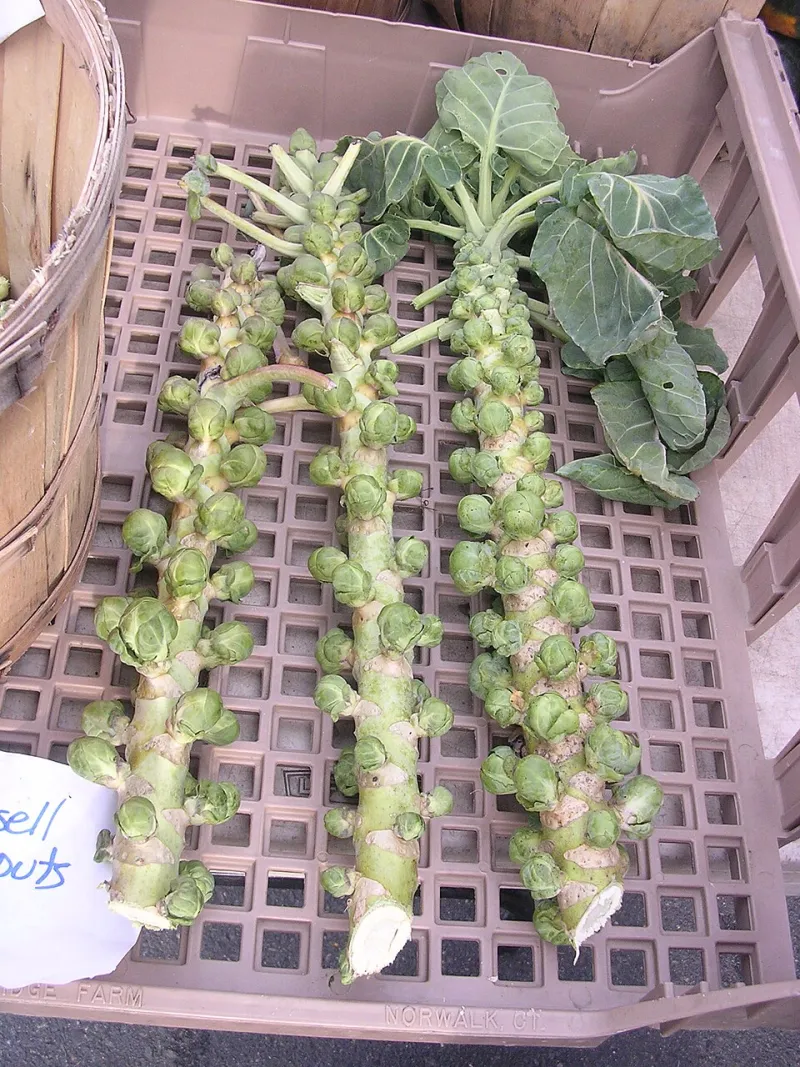
Photo: No machine-readable author provided. Phr~commonswiki assumed (based on copyright claims)., CC BY-SA 3.0, via Wikimedia Commons
Every December, the Brussels sprout walks into the room expecting a fight. It has been boiled to khaki, served as a dare, and blamed for everything from family arguments to the post-lunch slump. But at the deli counter, we see a different story. A whole sprout stalk, still sturdy and smelling of the field, is one of the most quietly impressive things you can put on a Christmas table. It is fresh, local and just a little bit dramatic. The sprout has had enough of being the joke. It is time to give it a proper hearing.
The stalk is not a prop
A sprout stalk is not a decorative flourish. It is a freshness marker. Sprouts start to lose their sweetness and snap the moment they are picked, and the stalk is the best travelling companion they have. Loose sprouts in a net can be days or even weeks old by the time they reach a kitchen. A stalk, cut close to Christmas by a grower you can name, tells you something useful: these buttons were still attached to a living plant very recently.
There is also the small matter of provenance. Buying a stalk from a local grower is a way of saying yes to a shorter journey, a fairer price for the person who grew it, and a vegetable that has not been trimmed and polished into anonymity. At The Deli on the Hill, we like a stalk that looks like it has come from a real field rather than a shelf. Slightly uneven. A few loose buttons at the bottom. Maybe a leaf or two that need pulling off. That is not a flaw. That is dinner telling you where it has been.
Why the stalk matters for flavour
Freshness is not a vague virtue. It is the difference between a sprout that tastes nutty and sweet and one that tastes sulphurous and tired. Older sprouts develop stronger, harsher notes; fresher ones have a gentler, greener flavour. If you have spent years believing you hate sprouts, there is a reasonable chance you have mostly been eating old ones. That is not a reason to give up. It is a reason to buy better.
A stalk also helps you cook more evenly. The buttons are all roughly the same size, and they are protected by the stalk until you need them. Keep the stalk in a cool place, give it a trim at the base if you like, and twist the sprouts off as you need them. They will hold their condition for longer than a loose bag. It is practical, old-fashioned and rather satisfying.
Cook them so the doubters take a second spoon
The first rule is simple: do not boil them to death. The second rule is nearly as simple: give them fat, heat and a little acidity. Sprouts love a hot oven, a wide pan and a bit of colour. Halve them, toss them with oil or brown butter, and roast them cut-side down until the edges are dark and crisp. The centres should be tender but still have a little bite. A squeeze of lemon or a spoonful of mustardy dressing at the end wakes everything up.
If you are cooking for a crowd, blanch the sprouts for a minute or two, drain them well, and finish them in a hot pan with bacon or chestnuts. This is the sort of cooking that converts people. It does not hide the sprout; it gives it a better platform. A little char, a little salt, a little sweetness from the pan — that is the difference between a obligation and a pleasure.
For anyone still unsure, try serving them with something creamy and something sharp. A blue cheese dressing, a spoonful of crème fraîche with mustard, or a scattering of toasted hazelnuts can do wonders. The sprout does not need to be tamed. It just needs a bit of company.
Pairings worth bringing to the table
At the counter, we like to think of sprouts as a team player. Smoked bacon is the classic for a reason: salty, savoury and happy to share the spotlight. Chestnuts bring a soft, sweet nuttiness that makes the whole dish feel more festive. Brown butter and sage is a quieter, more elegant route, especially if you are feeding vegetarians. A crumble of Stilton or a local blue cheese adds a sharp, creamy edge that cuts through the richness of the rest of the meal.
If you want something a little different, try a spoonful of quince jelly or a sharp apple compote alongside. The fruitiness flatters the sprout's natural sweetness. A handful of toasted pumpkin seeds or crispy shallots gives texture without fuss. And if you are building a Christmas board, a few raw sprout leaves make a surprisingly good addition: crisp, peppery and a useful contrast to all that cheese and cured meat.
A small ritual, not a chore
Buying sprouts on the stalk is not about being precious. It is about choosing something that still feels connected to the season. It gives you a job to do on Christmas Eve — twisting off the buttons, trimming the bases, maybe setting a few aside for a Boxing Day bubble and squeak. It makes the vegetable feel like part of the meal rather than an afterthought.
The sprout has spent long enough in the shadows. This year, buy the whole stalk, cook it with a bit of confidence, and pass it round the table without apology. You may find that the much-maligned little green button has been waiting for a fair chance all along.