The Knobbly Fruit at the Back of the Shelf: A Quince Lover’s Guide to Late Autumn
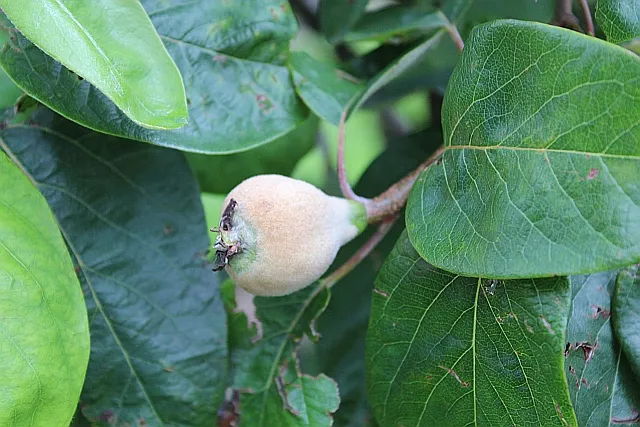
Photo: Bob Embleton , CC BY-SA 2.0, via Wikimedia Commons
Quince does not hurry. It arrives in carrier bags and crates, hard as a cricket ball and covered in a faint peach-like fuzz, usually with a neighbour saying, ‘I’ve got more than I know what to do with.’ By early November 2026, the first proper batch has usually made its way down the hill to us, and the deli starts to smell faintly of roses, honey and something older than either.
That is the strange gift of British quince. It is not a fruit you eat over the sink. It is a fruit you plan around. And for a neighbourhood deli, it is a useful reminder that the best seasonal larder finds are not always the neat ones.
A fruit that arrives with the cold
Quince season in the UK tends to run from late October into December, depending on the variety and the sort of autumn we have had. Vranja, Meech’s Prolific and Champion are among the names you might see on a label at a farmers’ market, though many garden trees go unnamed. The fruit hangs late, turning from green to a dull gold, and it often finishes ripening indoors rather than on the branch.
It is not a supermarket fruit, and that is part of its appeal. It bruises, it bends the shape of a punnet, and it refuses to behave like a pear. But leave a few in a bowl and the whole room starts to smell as if someone has been making jam. That perfume is the first clue to what quince becomes in the kitchen.
From a neighbour’s tree to the counter
The quince route we know best is short. A tree in a back garden, a bag left on a doorstep, a message asking whether we can use ‘a few more’. We can. Our kitchen turns some of it into membrillo — the dense, ruby-coloured paste that sits so well beside cheese — and the rest is poached in light syrup for the counter or used in a small batch of chutney when the mood takes us.
This is maker-to-counter work at its most local. There is no grand supply chain, just a fruit that would otherwise go to waste and a kitchen willing to stand over a pan. Membrillo made this way is never quite the same twice: one batch leans tart, another tastes of lemon peel and bay, and a hot autumn can push the sugar levels around. We think that is a feature, not a fault.
Choosing a quince worth the knife work
Look for fruit that feels heavy for its size. The skin should be firm, yellow-gold and intact, with no soft brown patches or damp spots. A little natural scuffing is fine. A quince that gives under your thumb is already going over.
If you are buying from a market stall, ask whether the fruit is ready to cook. Some quinces need a week or two in a cool room to soften and sweeten. Others are ready as soon as they are picked. At home, keep them in a single layer, not touching, somewhere cool and dark. They will perfume the cupboard and hold for a few weeks, but check them regularly.
Preparing quince is straightforward but stubborn. Peel it, quarter it, and cut away the core and any hard bits around it. The flesh is dense, so use a sharp knife and take your time. Some cooks rub the cut fruit with lemon to stop it browning; it will darken anyway, but the lemon helps.
Poaching, membrillo and the quiet alchemy of heat
Quince needs heat and time. For poached quince, make a light syrup with sugar, water and a squeeze of lemon, then add bay, vanilla, star anise or a strip of orange peel. Lower the peeled quarters into the syrup and cook gently until they turn from pale gold to a soft, rosy pink. Depending on the fruit, that can take an hour or more. A low oven works well if you want to set it going and forget about it.
Membrillo is the same idea taken further. Cook chopped quince with sugar and a little water until the fruit collapses, then keep going, stirring often, until the mixture is deep red, thick and glossy. It should hold its shape when you spoon a little onto a cold plate. Pour it into a lined tin, leave it to set, and cut it into squares or slices. Wrapped well, it keeps for months.
On the winter board: cheese, ham, warm bread
This is where quince earns its place. Membrillo is a natural partner for aged cheddar, a salty blue and soft, bloomy cheeses. It also works with cold ham, pork pie, roast chicken and a shard of good sourdough warmed until the crust crackles. Poached quince slices are gentler: spoon them over yogurt, fold them into a tart, or serve them alongside a wedge of cheese and a few walnuts.
The point is not to make the board look clever. It is to give it something sweet, sharp and aromatic that cuts through the richness of winter food. Quince does that without shouting.
Storing the last of it
Poached quince will keep in its syrup in the fridge for a couple of weeks, covered. Membrillo is more forgiving: wrap it in parchment, then foil, and keep it cool and dark. Raw fruit should be checked often and used before it turns soft. If you have more than you can handle, cook it down. Quince is one of those fruits that rewards a long afternoon in the kitchen.
By the time the Christmas boards go out, the quince will be in its last flush. It is a patient fruit, and it asks for patience in return. But a spoonful of membrillo beside a piece of cheese, or a few rose-coloured slices on a plate of cold ham, is worth the wait. Come and ask at the counter if you spot a batch. We will happily point you towards the good stuff.